
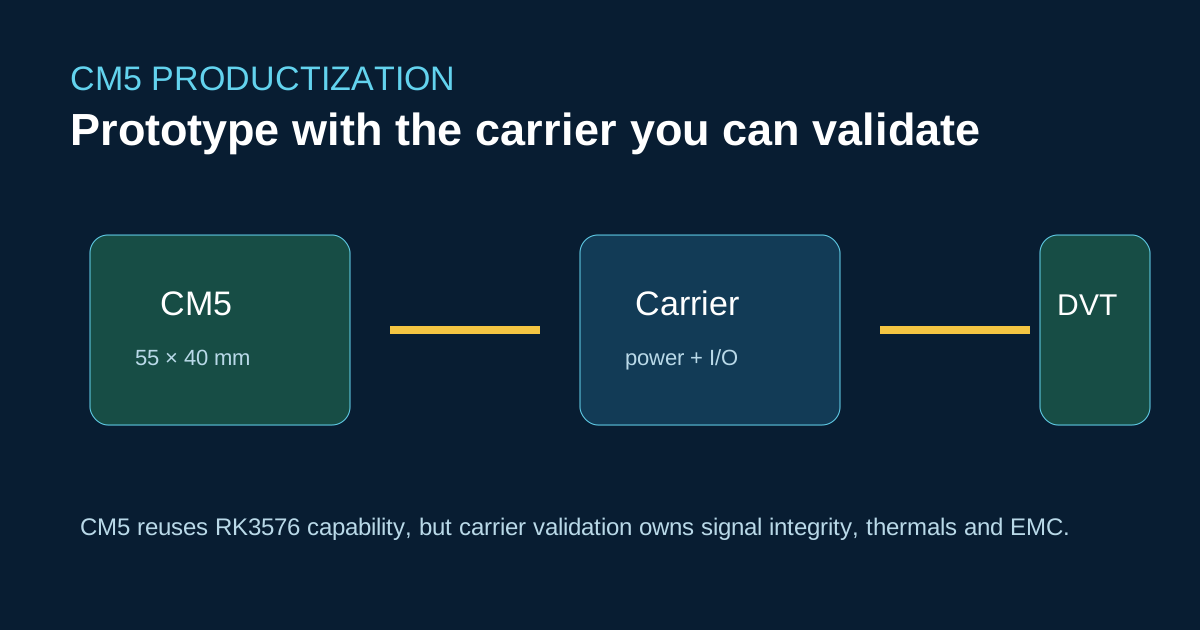
The CM5 is a 55 × 40 mm RK3576 compute module. It can shorten a product schedule, but it moves risk into the carrier: power sequencing, high-speed routing, connector selection, thermal transfer and manufacturing test.
Bring-up order
Start with power rails and serial console. Add one high-speed interface at a time, then validate USB, PCIe, camera, display and Ethernet under load. Keep a revisioned pin map; do not copy a Raspberry Pi schematic by signal name alone.
uname -a
cat /proc/device-tree/model
dmesg | grep -iE 'pcie|usb|dwc3|eth|drm'
ArmSoM notes a CM5 v1.2 pin-21 issue fixed in v1.3; production documentation should lock the module revision and test the affected net.
Why it is not a drop-in
The module has RK3576 compute and documented CSI/PCIe/USB resources, but a custom carrier defines the actual connectors and electrical behavior. Jetson Nano carrier assumptions, CUDA dependencies and boot tooling do not transfer.
References
Pre-publication check
- Freeze module revision and pin map.
- Include SI, thermal and EMC validation ownership.
- Test recovery and factory programming on the carrier.