
This complete article follows Appnote_rk_storage_0001, Rev.08, pages 4–23. The only supplied PDF is in the Chinese directory but its actual body is English. English preserves that original; Chinese, Russian and German fully translate it. All four languages use its original English diagrams and screenshots; no separate Chinese or English-directory PDF was supplied. This is an ArmSoM platform reference, not proof of support on every board. The source does not specify an exact SoC, board, SDK/BSP or kernel version; verify storage backend, boot layout, driver configuration, API ABI and device node against the actual platform. No hardware read/write or power-loss validation was performed.
Warning: the final write example overwrites ID 1 (SN) with bytes 0–31. Do not run it on production devices. Back up device identity/provisioning data first. Source types, error macros and file-descriptor cleanup are incomplete; code is retained for traceability, not certified runnable.
ArmSoM Docs · Rockchip Linux kernel · EDITORIAL-NOTES
1 Application Note Summary
Vendor storage is designed for storing SN, MAC and other vendor data. Features:
- Unique ID access
- Reliable data validation
- Power-loss recovery
- Readable and writable from PC
- Readable and writable from UBOOT
- Readable and writable from the kernel
- Readable and writable from Linux applications
2 Vendor Storage Architecture
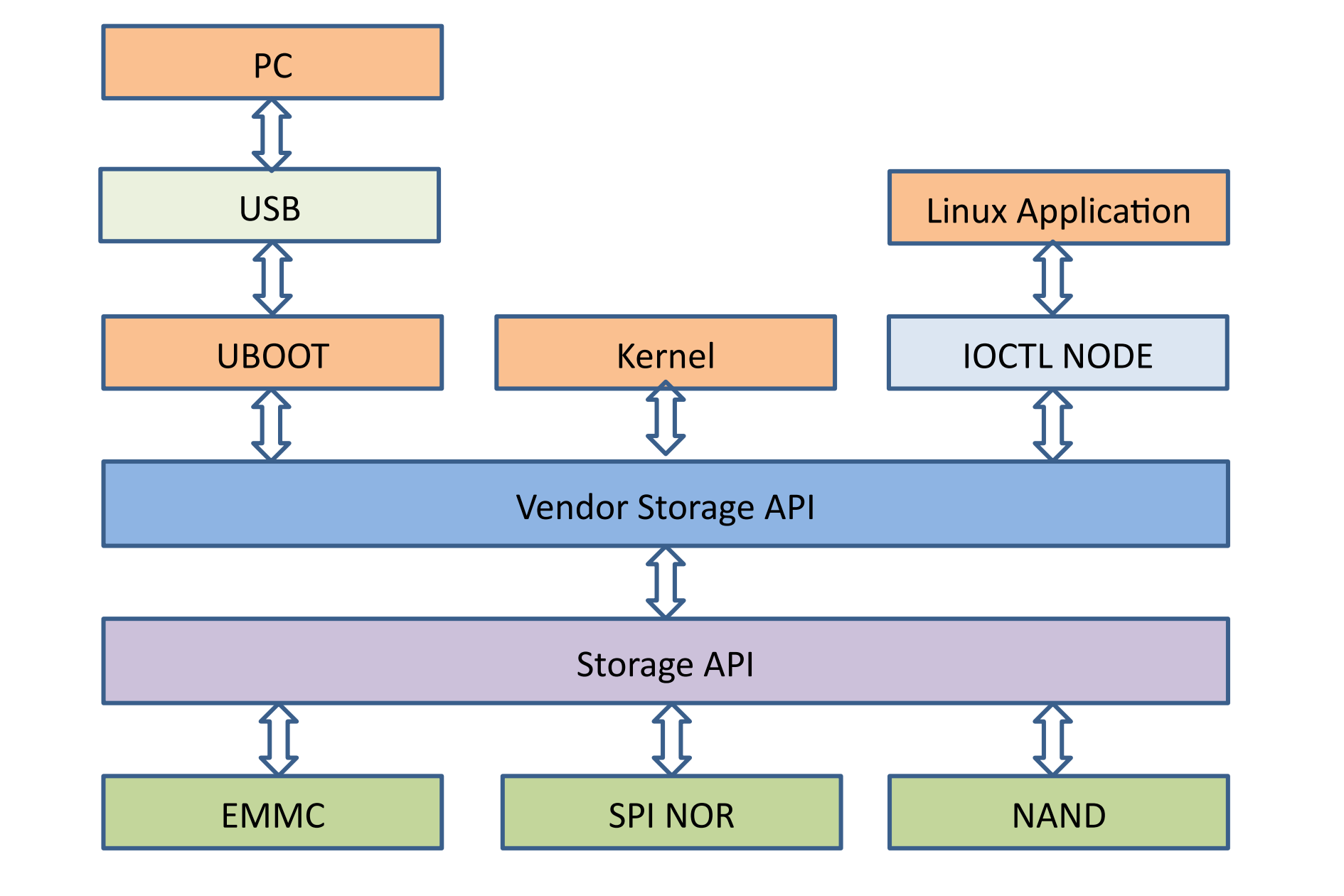
The diagram connects PC → USB → UBOOT and Linux Application → IOCTL NODE to Vendor Storage API; Kernel also connects to Vendor Storage API. Storage API provides the lower layer for EMMC, SPI NOR and NAND.
3 Data Layout
3.1 SPI NOR and EMMC
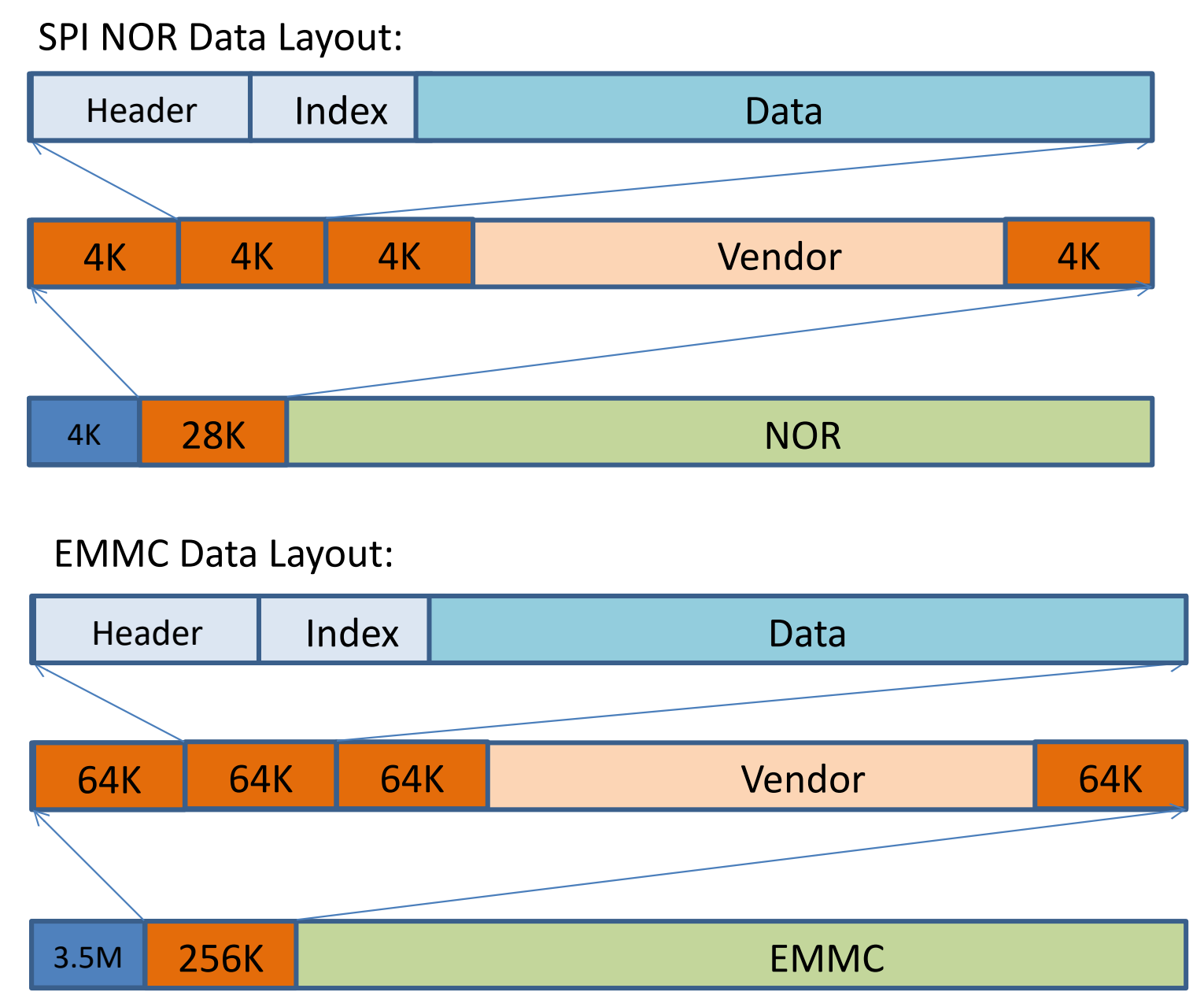
The original figure expands Header / Index / Data within each vendor block. Its SPI NOR labels show 4K before a 28K region, with four 4K block labels in the expanded vendor area. The EMMC labels show 3.5M before a 256K region, expanded into four 64K blocks. Keep these source labels and verify their applicability against the actual boot/storage layout; the diagram is not a universal partitioning command.
3.2 SPI NAND / SLC NAND
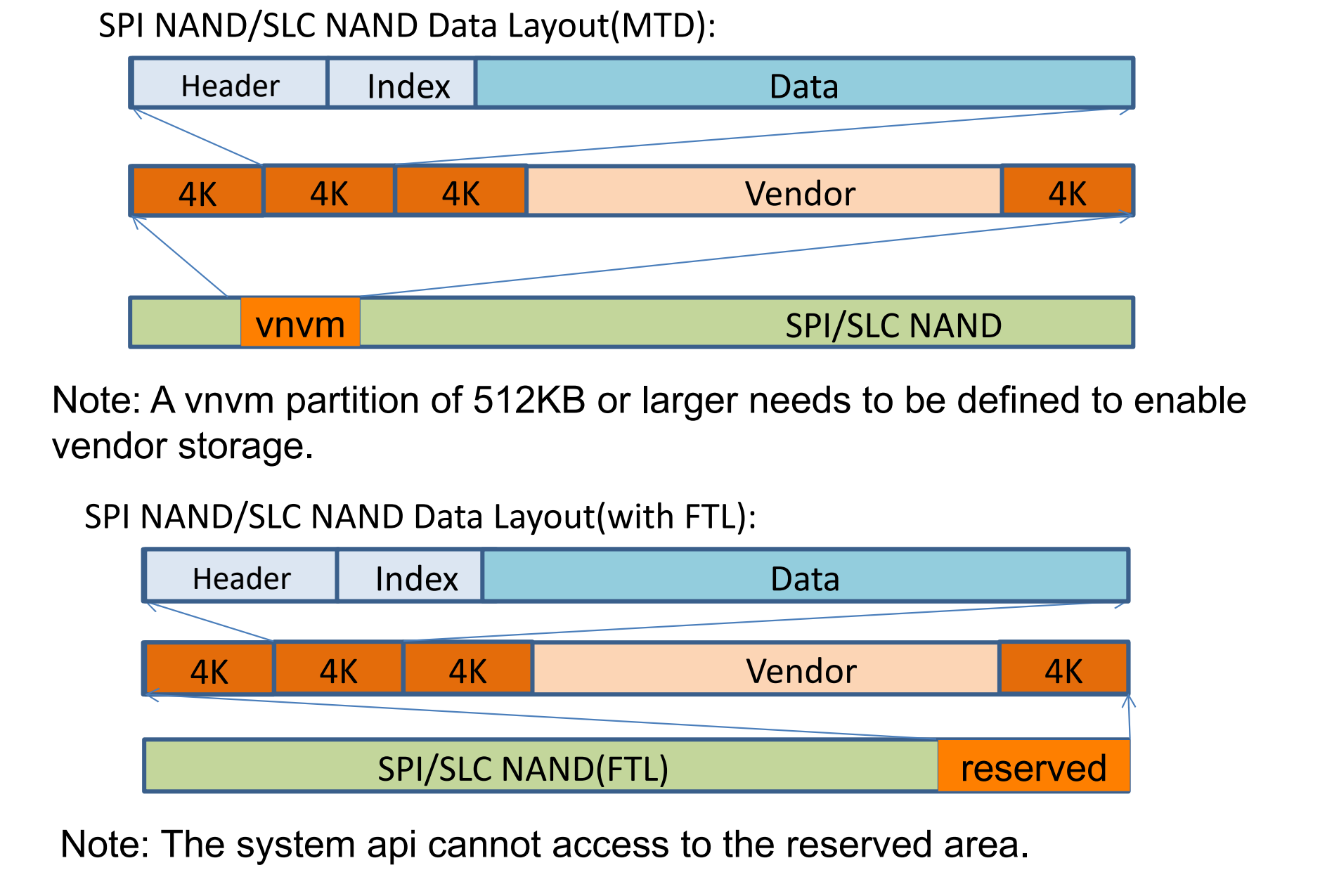
- MTD: define a
vnvmpartition of 512KB or larger to enable vendor storage. The diagram shows four 4K blocks and Header / Index / Data within thevnvmarea. - With FTL: the diagram places four 4K blocks in the reserved area of SPI/SLC NAND (FTL). The system API cannot access this reserved area.
3.3 Record layout
| Offset (B) | Size (B) | Name |
|---|---|---|
| 0x0000 | 0x0004 | Tag, the value is 0x524B5644. |
| 0x0004 | 0x0004 | Version, increase after write |
| 0x0008 | 0x0002 | Next index |
| 0x000A | 0x0002 | Total items |
| 0x000C | 0x0002 | Free offset |
| 0x000E | 0x0002 | Free size |
| 0x0010 | 0x0002 | Item0->id |
| 0x0012 | 0x0002 | Item0->offset |
| 0x0014 | 0x0002 | Item0->size |
| 0x0016 | 0x0002 | Item0->flag(reversed) |
| 0x0018 | 0x0008 | Item1 |
| … | … | Item x |
| — | — | Data (EMMC: about 62KB, other: about 3.5KB) |
| Size – 0x08 | 0x0004 | Hash |
| Size – 0x04 | 0x0004 | Version2, the value is the same as the Version |
4 ID Definitions
| ID | Function |
|---|---|
| 0 | reserved |
| 1 | SN |
| 2 | WIFI MAC |
| 3 | LAN MAC |
| 4 | BT MAC |
| 5 | HDCP 1.4 HDMI |
| 6 | HDCP 1.4 DP |
| 7 | HDCP 2.X |
| 8 | DRM KEY |
| 9 | PLAYREADY Cert |
| 10 | ATTENTION KEY |
| 11 | PLAYREADY ROOT KEY 0 |
| 12 | PLAYREADY ROOT KEY 1 |
| 13 | HDCP 1.4 HDMIRX |
| 14 | SENSOR CALIBRATION |
| 15 | IMEI |
| 16 | LAN_RGMII_DL |
| 17 | EINK_VCOM_ID |
| 18 | FIRMWARE_VER_ID |
| 19 | HDCP_2X_RX_ID |
| 20 | HDCP_2X_HDMIRX_ID |
| 21 – 31 | RK reserved for future use |
| 32 - 65535 | Vendor use |
Data is stored in NVM with 64-byte alignment. Each item therefore has a minimum allocation of 64 bytes: writing 1–64 bytes allocates 64 bytes; writing 65–128 bytes allocates 128 bytes.
5 API for UBOOT
u-boot/board/rockchip/common/storage/storage.c
vendor_storage_init
int vendor_storage_init(void);
| Field | Description |
|---|---|
| Function | Initialize vendor storage |
| Input | none |
| Return | 0: initialization succeeded; other: initialization failed |
vendor_storage_read
int vendor_storage_read(u32 id, void *pbuf, u32 size);
| Field | Description |
|---|---|
| Function | Read vendor storage by ID |
| Input | id: item ID; pbuf: data buffer; size: number of bytes to read |
| Return | -1: read failed; other: number of bytes read |
vendor_storage_write
int vendor_storage_write(u32 id, void *pbuf, u32 size);
| Field | Description |
|---|---|
| Function | Write vendor storage by ID |
| Input | id: item ID; pbuf: data buffer; size: number of bytes to write |
| Return | 0: write succeeded; other: write failed |
6 API for the Kernel
kernel/drivers/soc/rockchip/rk_vendor_storage.c
kernel/drivers/soc/rockchip/sdmmc_vendor_storage.c
rk_vendor_read
int rk_vendor_read(u32 id, void *pbuf, u32 size);
| Field | Description |
|---|---|
| Function | Read vendor storage by ID |
| Input | id: item ID; pbuf: data buffer; size: number of bytes to read |
| Return | -1: read failed; other: number of bytes read |
rk_vendor_write
int rk_vendor_write(u32 id, void *pbuf, u32 size);
| Field | Description |
|---|---|
| Function | Write vendor storage by ID |
| Input | id: item ID; pbuf: data buffer; size: number of bytes to write |
| Return | 0: write succeeded; other: write failed |
7 Kernel Configuration
Makefile

#
# Rockchip soc drivers
#
obj-$(CONFIG_MMC_DW_ROCKCHIP) += sdmmc_vendor_storage.o
obj-$(CONFIG_ROCKCHIP_VENDOR_STORAGE) += rk_vendor_storage.o
Menuconfig
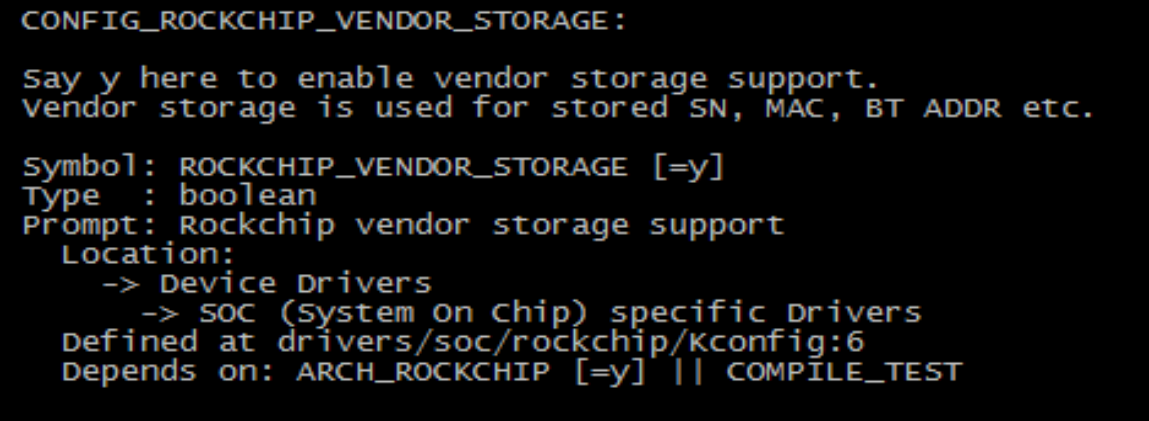
CONFIG_ROCKCHIP_VENDOR_STORAGE:

Say y here to enable vendor storage support.
Vendor storage is used for stored SN, MAC, BT ADDR etc.

Symbol: ROCKCHIP_VENDOR_STORAGE [=y]
Type  : boolean
Prompt: Rockchip vendor storage support
  Location:
    -> Device Drivers
      -> SOC (System On Chip) specific Drivers
  Defined at drivers/soc/rockchip/Kconfig:6
  Depends on: ARCH_ROCKCHIP [=y] || COMPILE_TEST
Select y to enable vendor storage support for SN, MAC, BT ADDR and similar data. The original screenshot shows the symbol enabled ([=y]), a boolean option under Device Drivers → SOC (System On Chip) specific Drivers. The dependency is ARCH_ROCKCHIP [=y] || COMPILE_TEST; the definition is at drivers/soc/rockchip/Kconfig:6.
8 PC Demo Tool
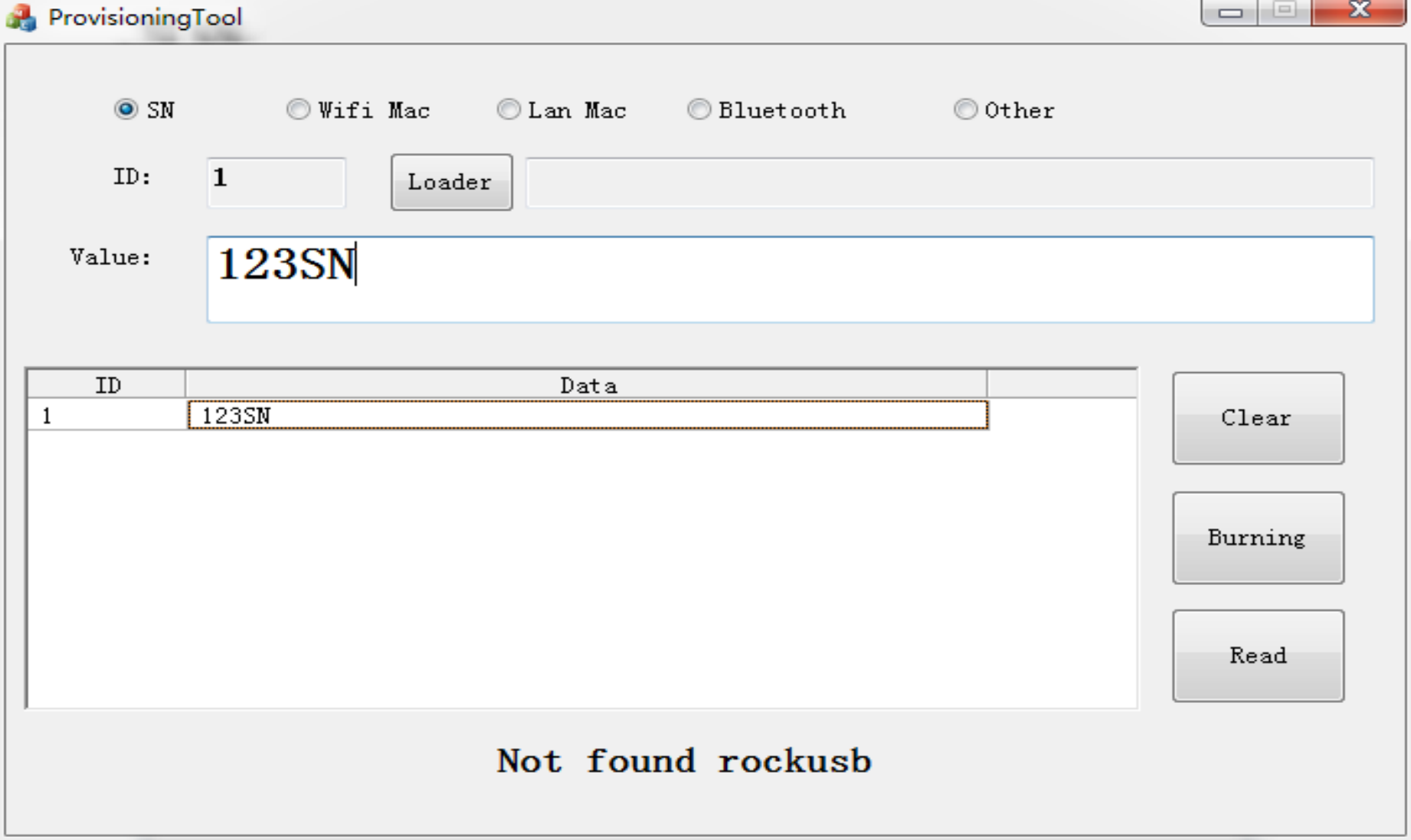
1. Select the SN option, enter the SN value, and press ENTER to add the SN item to the write request list. The example uses 123SN; the screenshot status is Not found rockusb.
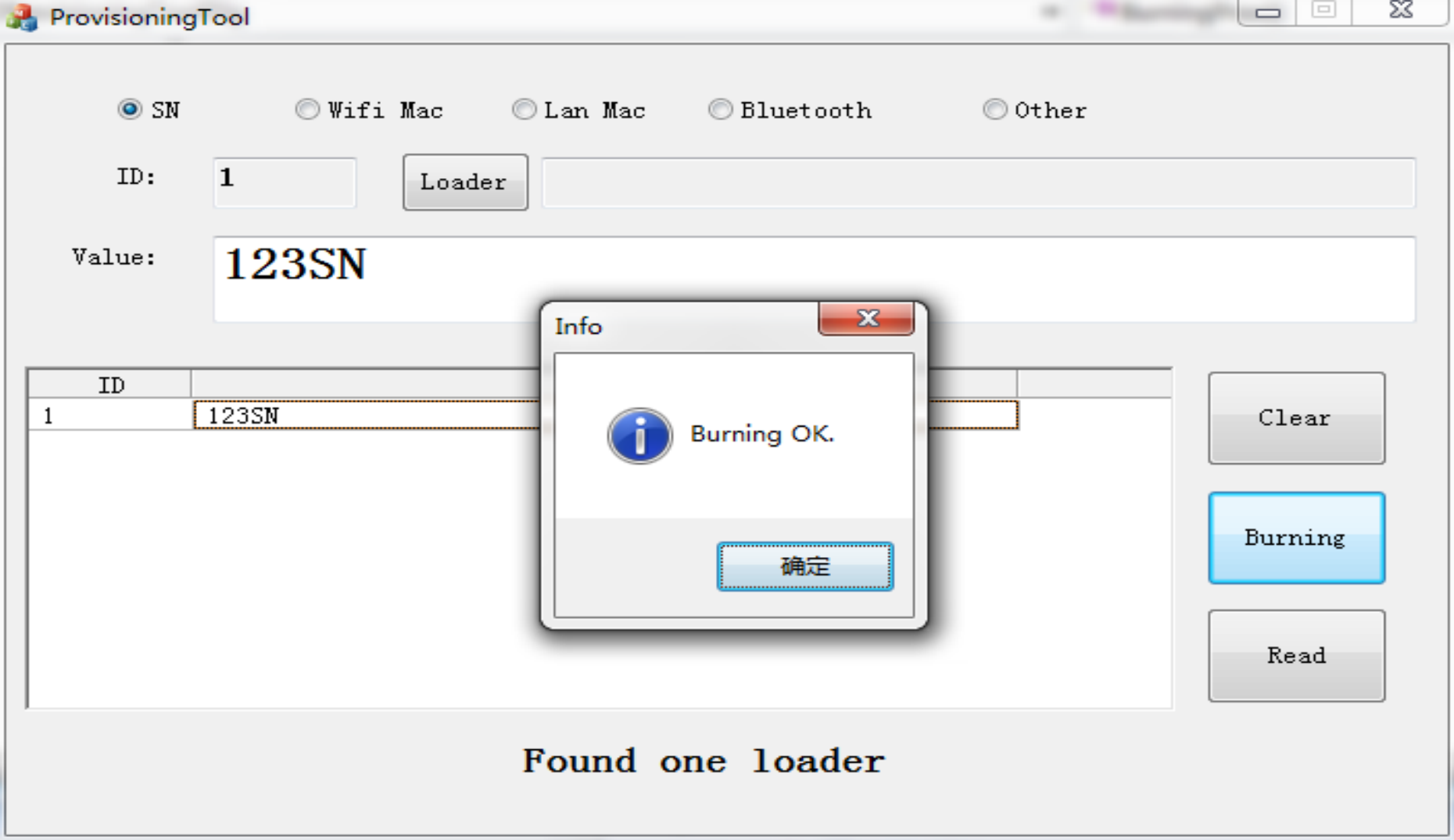
2. Press Burning to write data into vendor storage. The source shows Burning OK. and Found one loader.
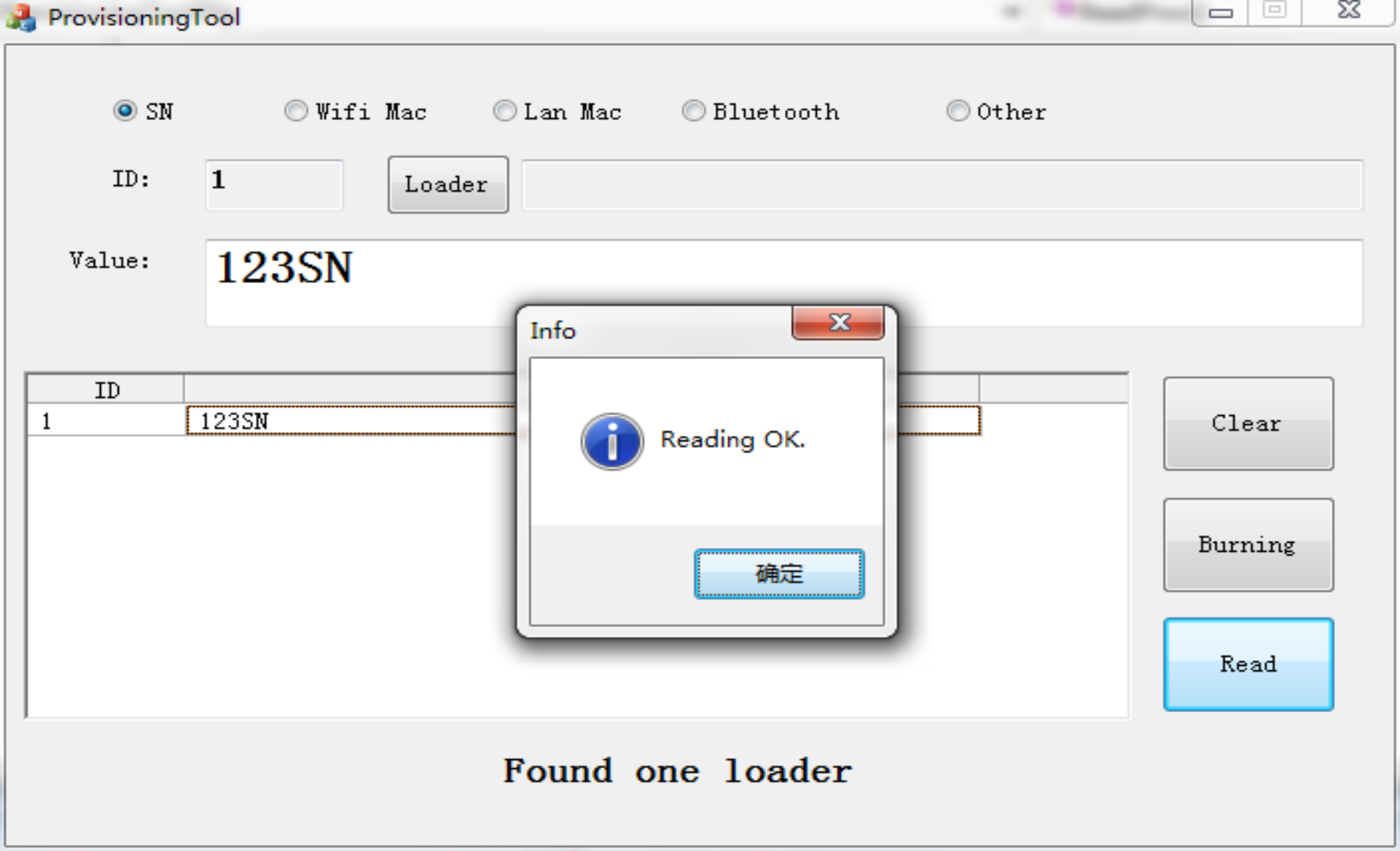
3. Select SN and press Read to read the data back from vendor storage. The example shows 123SN, Reading OK. and Found one loader.
9 PC Tool Source Code
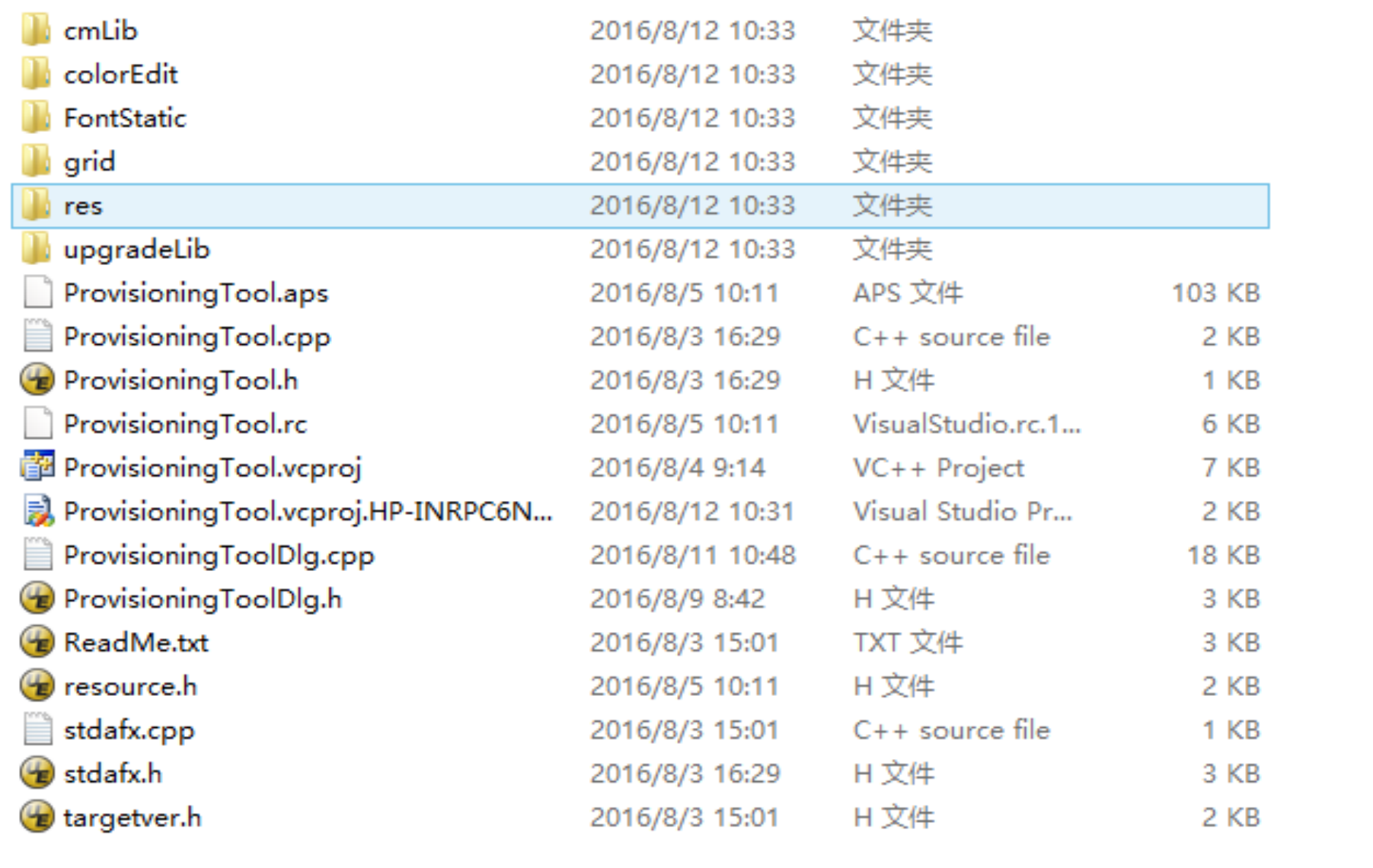
The source provides a project-directory screenshot, not the contents of these source files. The truncated name below remains truncated; its hidden suffix is not reconstructed.
cmLib/
colorEdit/
FontStatic/
grid/
res/
upgradeLib/
ProvisioningTool.aps
ProvisioningTool.cpp
ProvisioningTool.h
ProvisioningTool.rc
ProvisioningTool.vcproj
ProvisioningTool.vcproj.HP-INPRC6N...
ProvisioningToolDlg.cpp
ProvisioningToolDlg.h
ReadMe.txt
resource.h
stdafx.cpp
stdafx.h
targetver.h
10 PC Tool: Read Data
/*----------------------------------------------------------------------
Name   : RK_ReadProvisioningData
Desc   : Read provisioning data by id
Params : (IN)nID                    id
         (OUT)pDataBuffer:          buffer to save data, malloc by caller
         (IN|OUT)nBufferSize:       in = size of buffer,out = actual data size
         (IN)dwLayer:               device layer
Return : TRUE:  SUCCESSED
         FALSE: FAILED
----------------------------------------------------------------------*/
BOOL RK_ReadProvisioningData(USHORT nID,PBYTE pDataBuffer,USHORT &nBufferSize,DWORD dwLayer=0);
Read provisioning data by ID. pDataBuffer is allocated by the caller; nBufferSize supplies the buffer size on input and actual data size on output. dwLayer selects the device layer and defaults to 0. Return TRUE on success, FALSE on failure.
11 PC Tool: Write Data
/*----------------------------------------------------------------------
Name   : RK_WriteProvisioningData
Desc   : Write provisioning data by id
Params : (IN)nID                    id
         (IN)pDataBuffer:           buffer to save data, malloc by caller
         (IN)nBufferSize:           size of buffer
         (IN)dwLayer:               device layer
Return : TRUE:  SUCCESSED
         FALSE: FAILED
----------------------------------------------------------------------*/
BOOL RK_WriteProvisioningData(USHORT nID,PBYTE pDataBuffer,USHORT nBufferSize,DWORD dwLayer=0);
Write provisioning data by ID. The caller allocates pDataBuffer; nBufferSize is the input buffer size. dwLayer is the device layer, default 0. Return TRUE on success, FALSE on failure.
12 Linux Demo Code
#include <fcntl.h>
#include <sys/ioctl.h>

typedef unsigned short uint16;
typedef unsigned long uint32;
typedef unsigned char uint8;

#define VENDOR_REQ_TAG 0x56524551
#define VENDOR_READ_IO _IOW('v', 0x01, unsigned int)
#define VENDOR_WRITE_IO _IOW('v', 0x02, unsigned int)
#define VENDOR_SN_ID 1
#define VENDOR_WIFI_MAC_ID 2
#define VENDOR_LAN_MAC_ID 3
#define VENDOR_BLUETOOTH_ID 4

struct rk_vendor_req {
    u32 tag;
    u16 id;
    u16 len;
    u8 data[1];
};
12.1 Read test
int vendor_storage_read_test(void)
{
    uint32 i;
    int ret ;
    uint8 p_buf[2048]; /* malloc req buffer or used extern buffer */
    struct rk_vendor_req *req;

    req = (struct rk_vendor_req *)p_buf;
    int sys_fd = open("/dev/vendor_storage",O_RDWR,0);
    if(sys_fd < 0){
        ERROR("vendor_storage open fail\n");
        return -1;
    }

    req->tag = VENDOR_REQ_TAG;
    req->id = VENDOR_SN_ID;
    req->len = 512; /* max read length to read*/
    ret = ioctl(sys_fd, VENDOR_READ_IO, req);
    /* return req->len is the real data length stored in the NV-storage */
    if(ret){
        ERROR("vendor read error\n");
        return -1;
    }
    return 0;
}
12.2 Write test
int vendor_storage_write_test(void)
{
    uint32 i;
    int ret ;
    uint8 p_buf[2048]; /* malloc req buffer or used extern buffer */
    struct rk_vendor_req *req;

    req = (struct rk_vendor_req *)p_buf;
    int sys_fd = open("/dev/vendor_storage",O_RDWR,0);
    if(sys_fd < 0){
        ERROR("vendor_storage open fail\n");
        return -1;
    }
    req->tag = VENDOR_REQ_TAG;
    req->id = VENDOR_SN_ID;
    req->len = 32; /* data len */
    for (i = 0; i < 32; i++)
        req->data[i] = i;
    rknand_print_hex_data("vendor write:", (uint32*)req, req->len + 8);
    ret = ioctl(sys_fd, VENDOR_WRITE_IO, req);
    if(ret){
        ERROR("vendor write error\n");
        return -1;
    }
    return 0;
}