
Based on the Chinese and English RK3576 Hardware Design Guide V1.1 (2024-05-28), for SoC-board design. CM5 carriers must follow the module interface; Sige5 can establish a software/peripheral baseline. This guide does not prescribe one SDK/BSP or kernel for every product; verify each board. Values are source references, not ArmSoM measurements.
RK3576_Hardware_Design_Guide_V1.1_20240528_EN.pdf · §2.3.9; Audio PCB
Count internal and external resources separately
The SoC has ten SAI blocks but only five external interfaces, plus two PDM groups, two external SPDIF TX/RX groups and DSM. Other audio resources serve video interfaces. External SAI4 is unavailable when DSM is used. For PCM/I2S/TDM, define master/slave, clock direction, slots and width before choosing the achievable sample rate.
Budget bandwidth and asynchronous clocks
Per-lane sample rate follows IO rate/(slots×width). TDM16 at 32bit/48kHz needs 24.576MHz SCLK; TDM32 needs 49.152MHz. The limit is 50MHz for master TX/RX and slave RX, but 25MHz for slave TX, subject to signal integrity. Four ASRC blocks handle sample-rate or asynchronous-clock conversion; they are not extra IO ports.
Routing, amplifiers and validation
Use reference 22Ω clock resistors near the source and daisy chains for multiple devices; two in-phase PDM clocks can reduce long branches. Route analog microphones pseudo-differentially away from DDR, LCD, inductors and RF. Put headphone/microphone protection near connectors. Align codec, amplifier enable and jack detection with software. Test playback, recording, loopback, switching pops and interference. DSM is a low-cost path, not a high-performance DAC.
Design parameters and review table
| Item | Source reference |
|---|---|
| SAI external | 5 |
| PDM | 2 groups |
| TDM16: 32bit ×48kHz | 24.576MHz |
| Slave TX SCLK | ≤25MHz |
| ASRC | 8–384kHz |
Source figures
The reference pages below contain the relevant circuit or timing figures; click for full resolution. Designators and component values belong to the reference design, not an ArmSoM product schematic.
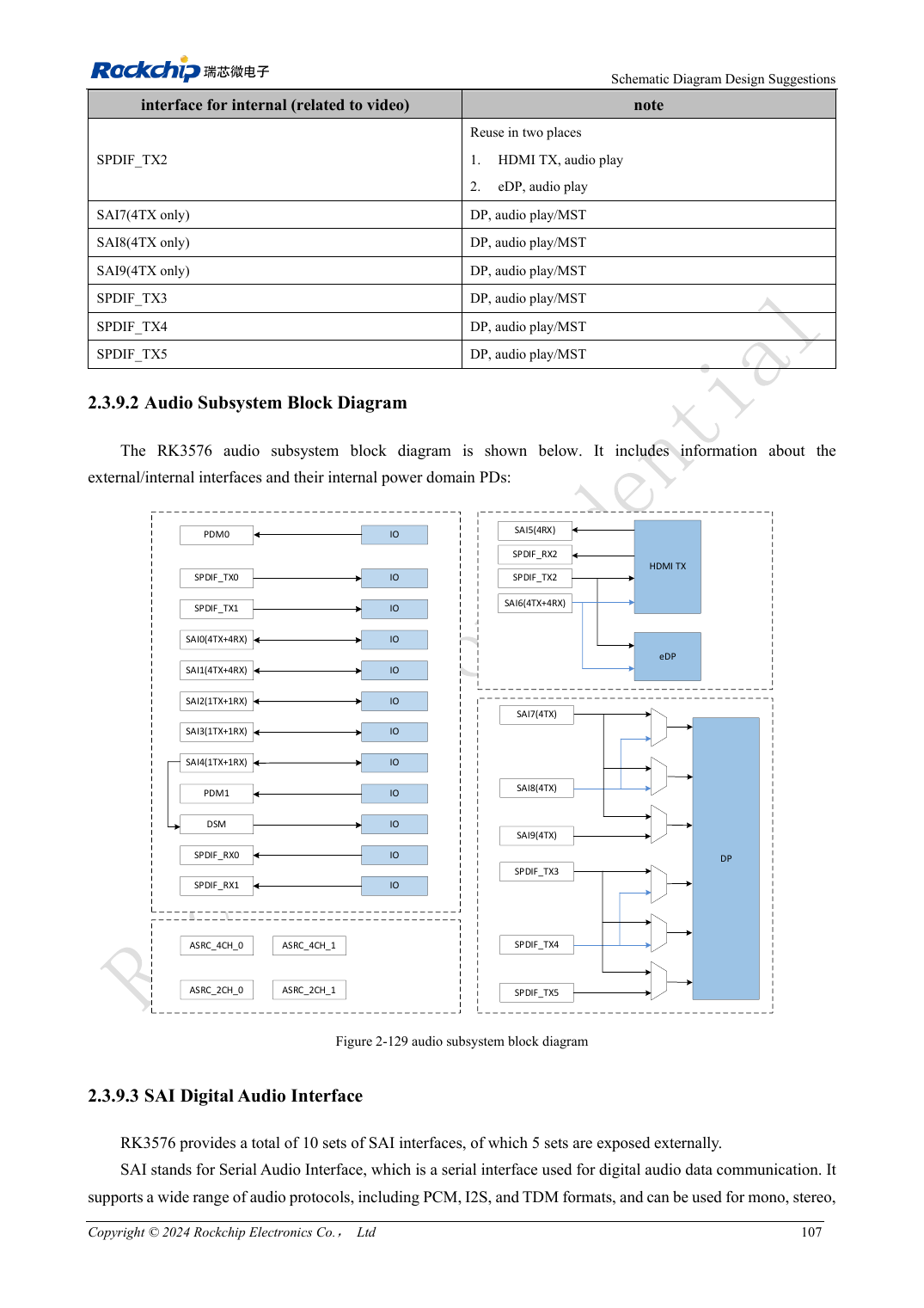
English original · PDF 126 · 2-129
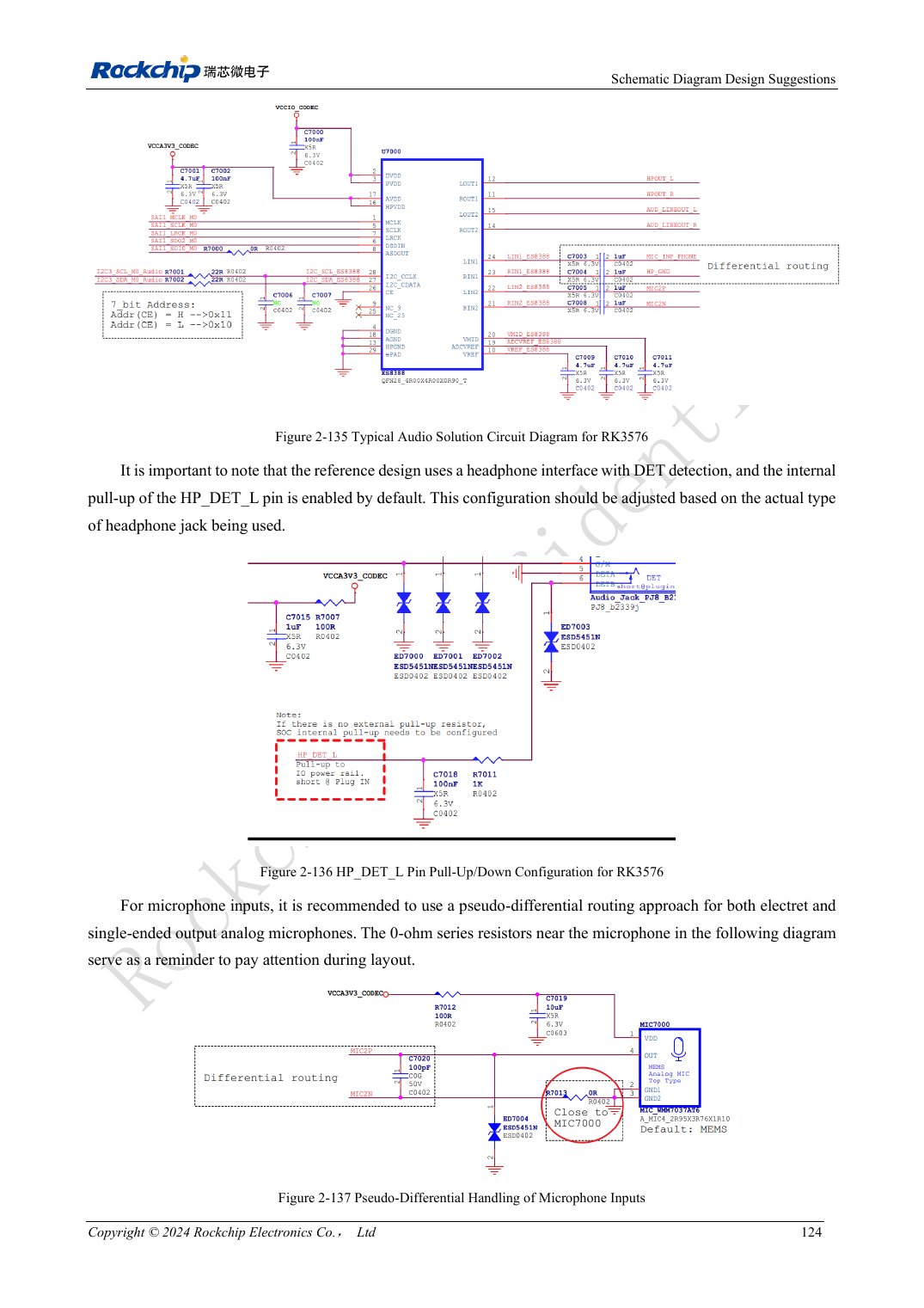
English original · PDF 143 · 2-137
ArmSoM development path
CM5 reduces repeated compute-core design on custom carriers; Sige5 provides a starting point for software and peripheral evaluation. Verify exposed interfaces, connector pins, voltages and image support in board documentation rather than inferring them from SoC features.