
Based on bilingual RK-SM-YF-211 V1.6, covering Wi-Fi compatibility, module builds/loading and SDIO diagnosis. The source covers Android 8/9/10/11 and Linux 4.4 or later, not every current BSP. For ArmSoM check wireless module, SoC, BSP, pins and kernel. This is a platform reference without hardware validation. All figures come from the same bilingual source; no separate English set exists.
1 Purpose
A firmware built with the compatibility framework supports multiple matching modules. The source says no further Android/kernel configuration is needed, subject to its SDK, device list and hardware assumptions.
1.1 Kernel
AP6xxx and Realtek must be modules, not built into kernel.img. For built-in operation see section 6 (the source incorrectly says 7). Defconfig:
CONFIG_WL_ROCKCHIP=y
CONFIG_WIFI_BUILD_MODULE=y
# CONFIG_WIFI_LOAD_DRIVER_WHEN_KERNEL_BOOTUP is not set
CONFIG_AP6XXX=m
CONFIG_RTL_WIRELESS_SOLUTION=y
CONFIG_RTL8188EU=m
CONFIG_RTL8188FU=m
CONFIG_RTL8189ES=m
CONFIG_RTL8189FS=m
CONFIG_RTL8723BS=m
CONFIG_RTL8723BU=m
CONFIG_RTL8723CS=m
CONFIG_RTL8723DS=m
Device Drivers --->
    [*] Network device support --->
        [*] Wireless LAN --->
            [*] Rockchip Wireless LAN support --->
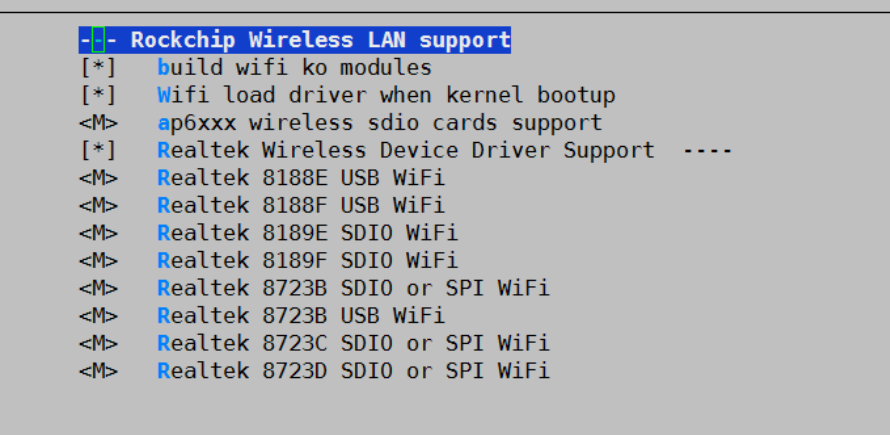
Technical figure 1, source PDF page 6 (bilingual original)
The board DTS chip type is optional; loading does not depend on wifi_chip_type. For non-reference designs check these pins; from Linux 4.4 power is configured through SDIO reset-gpios.
sdio_pwrseq: sdio-pwrseq {
    compatible = "mmc-pwrseq-simple";
    clocks = <&rk818 1>;
    clock-names = "ext_clock";
    pinctrl-names = "default";
    pinctrl-0 = <&wifi_enable_h>;
    /*
     * On the module itself this is one of these (depending
     * on the actual card populated):
     * - SDIO_RESET_L_WL_REG_ON
     * - PDN (power down when low)
     */
    reset-gpios = <&gpio3 4 GPIO_ACTIVE_LOW>; //wifi power
};
wireless-wlan {
    compatible = "wlan-platdata";
    wifi_chip_type ="ap6255"; //或者配置为 or configured as wifi_chip_type = "";
    WIFI,host_wake_irq = <&gpio0 GPIO_D4 GPIO_ACTIVE_HIGH>;
    status = "okay";
};
The reference power control is active-high; verify actual pin and polarity. For all supported modules, confirm board power pins and SDIO levels beforehand; see section 4.
1.2 Android
Kernel builds generate .ko files; Android copies them into /vendor/lib/modules/ in vendor.img. File vendor/rockchip/common/wifi/wifi.mk:
WIFI_KO_FILES := $(shell find $(TOPDIR)kernel/drivers/net/wireless/rockchip_wlan -name "*.ko" -type f)
BOARD_VENDOR_KERNEL_MODULES += \
    $(foreach file, $(WIFI_KO_FILES), $(file))

Technical figure 1, source PDF page 7 (bilingual original)
2 Compatibility principle
2.1 Identification
- Power on and scan SDIO at boot.
- At Wi-Fi start read uevent under sys/bus/sdio, sys/bus/usb and source sys/bus/pic (PCIe); pic appears misspelled, verify the actual PCI path.
- Load .ko by VID/PID.
- Select wpa_supplicant arguments by type. Core directories:
android/frameworks/opt/net/wifi
kernel/net/rfkill/rfkill-wlan.c
hardware/broadcom
external/wpa_supplicant_8
3 New modules
The SDK already contains the framework; modify these points.
3.1 Porting
Drivers are in kernel/drivers/net/wireless/rockchip_wlan. Add Kconfig/Makefile under kernel/drivers/net/wireless; some drivers need their own files changed. For Realtek see its porting guide. Kernel builds must produce .ko correctly; rebuild after network configuration changes to avoid stack mismatch.
3.2 Compatibility mapping
Add names and VID/PID to supported_wifi_devices[] in frameworks/opt/net/wifi/libwifi_hal/rk_wifi_ctrl.cpp; read IDs from uevent. AP6255 is 02d0:09bf in prose but 02d0:a9bf in the screenshot and later example; verify actual enumeration.
typedef struct _wifi_devices
{
    char wifi_name[64];
    char wifi_vid_pid[64];
} wifi_device;

static wifi_device supported_wifi_devices[] = {
    {"RTL8188EU", "0bda:8179"},
    {"RTL8188EU", "0bda:0179"},
    {"RTL8723BU", "0bda:b720"},
    {"RTL8723BS", "024c:b723"},
    {"RTL8822BS", "024c:b822"},
    {"RTL8723CS", "024c:b703"},
    {"RTL8723DS", "024c:d723"},
    {"RTL8188FU", "0bda:f179"},
    {"RTL8822BU", "0bda:b82c"},
    {"RTL8189ES", "024c:8179"},
    {"RTL8189FS", "024c:f179"},
    {"RTL8192DU", "0bda:8194"},
    {"RTL8812AU", "0bda:8812"},
    {"SSV6051", "3030:3030"},
    {"ESP8089", "6666:1111"},
    {"AP6354", "02d0:4354"},
    {"AP6330", "02d0:4330"},
    {"AP6356S", "02d0:4356"},
    {"AP6335", "02d0:4335"},
    {"AP6255", "02d0:a9bf"},
    {"RTL8822BE", "10ec:b822"},
};
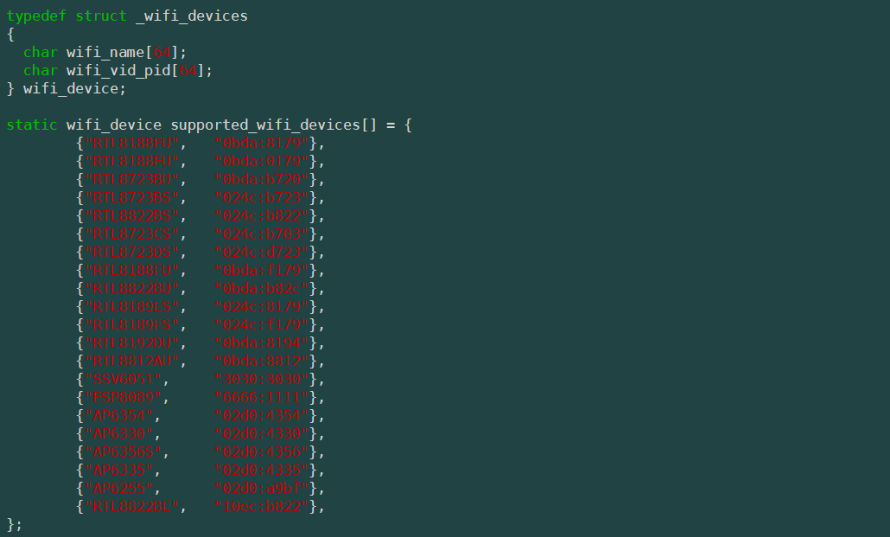
Technical figure 1, source PDF page 9 (bilingual original)
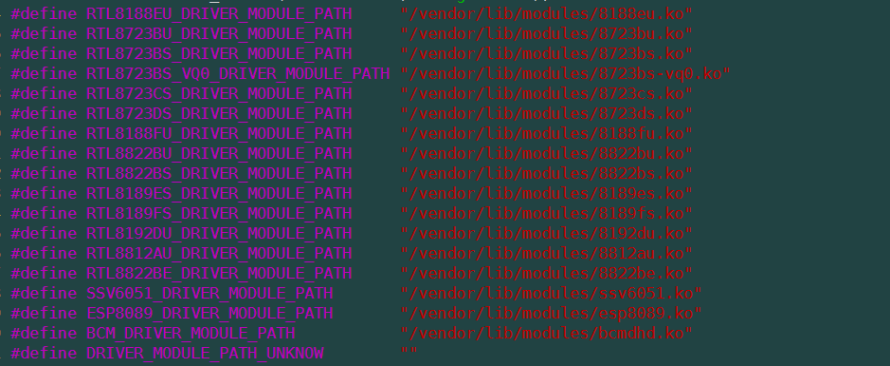
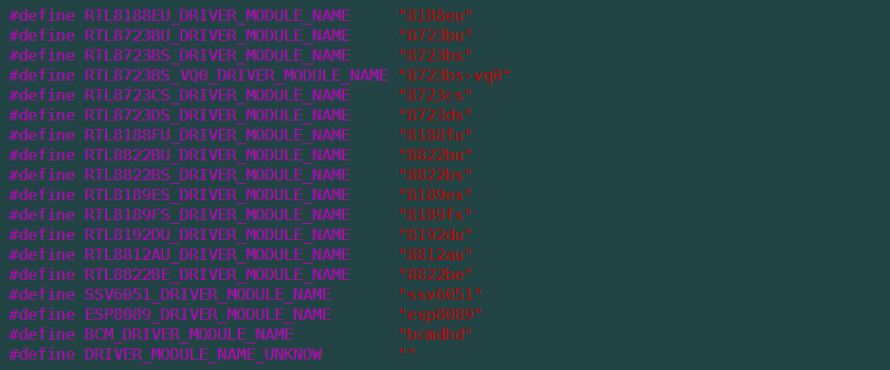
wifi_ko_file_name module_list[] in wifi_hal_common.cpp stores paths and arguments, named XXXX_DRIVER_MODULE_PATH. Without arguments use UNKKOWN_DRIVER_MODULE_ARG (source spelling); otherwise follow driver instructions. Names must match supported_wifi_devices[], also misspelled supported_wifi_devies[] in the source.
#define RTL8188EU_DRIVER_MODULE_PATH "/vendor/lib/modules/8188eu.ko"
#define RTL8723BU_DRIVER_MODULE_PATH "/vendor/lib/modules/8723bu.ko"
#define RTL8723BS_DRIVER_MODULE_PATH "/vendor/lib/modules/8723bs.ko"
#define RTL8723BS_VQ0_DRIVER_MODULE_PATH "/vendor/lib/modules/8723bs-vq0.ko"
#define RTL8723CS_DRIVER_MODULE_PATH "/vendor/lib/modules/8723cs.ko"
#define RTL8723DS_DRIVER_MODULE_PATH "/vendor/lib/modules/8723ds.ko"
#define RTL8188FU_DRIVER_MODULE_PATH "/vendor/lib/modules/8188fu.ko"
#define RTL8822BU_DRIVER_MODULE_PATH "/vendor/lib/modules/8822bu.ko"
#define RTL8822BS_DRIVER_MODULE_PATH "/vendor/lib/modules/8822bs.ko"
#define RTL8189ES_DRIVER_MODULE_PATH "/vendor/lib/modules/8189es.ko"
#define RTL8189FS_DRIVER_MODULE_PATH "/vendor/lib/modules/8189fs.ko"
#define RTL8192DU_DRIVER_MODULE_PATH "/vendor/lib/modules/8192du.ko"
#define RTL8812AU_DRIVER_MODULE_PATH "/vendor/lib/modules/8812au.ko"
#define RTL8822BE_DRIVER_MODULE_PATH "/vendor/lib/modules/8822be.ko"
#define SSV6051_DRIVER_MODULE_PATH "/vendor/lib/modules/ssv6051.ko"
#define ESP8089_DRIVER_MODULE_PATH "/vendor/lib/modules/esp8089.ko"
#define BCM_DRIVER_MODULE_PATH "/vendor/lib/modules/bcmdhd.ko"
#define DRIVER_MODULE_PATH_UNKNOW ""

#define RTL8188EU_DRIVER_MODULE_NAME "8188eu"
#define RTL8723BU_DRIVER_MODULE_NAME "8723bu"
#define RTL8723BS_DRIVER_MODULE_NAME "8723bs"
#define RTL8723BS_VQ0_DRIVER_MODULE_NAME "8723bs-vq0"
#define RTL8723CS_DRIVER_MODULE_NAME "8723cs"
#define RTL8723DS_DRIVER_MODULE_NAME "8723ds"
#define RTL8188FU_DRIVER_MODULE_NAME "8188fu"
#define RTL8822BU_DRIVER_MODULE_NAME "8822bu"
#define RTL8822BS_DRIVER_MODULE_NAME "8822bs"
#define RTL8189ES_DRIVER_MODULE_NAME "8189es"
#define RTL8189FS_DRIVER_MODULE_NAME "8189fs"
#define RTL8192DU_DRIVER_MODULE_NAME "8192du"
#define RTL8812AU_DRIVER_MODULE_NAME "8812au"
#define RTL8822BE_DRIVER_MODULE_NAME "8822be"
#define SSV6051_DRIVER_MODULE_NAME "ssv6051"
#define ESP8089_DRIVER_MODULE_NAME "esp8089"
#define BCM_DRIVER_MODULE_NAME "bcmdhd"
#define DRIVER_MODULE_NAME_UNKNOW ""
Technical figure 1, source PDF page 10 (bilingual original)
Technical figure 2, source PDF page 10 (bilingual original)
wifi_ko_file_name module_list[] =
{
    {"RTL8723BU", RTL8723BU_DRIVER_MODULE_NAME, RTL8723BU_DRIVER_MODULE_PATH, UNKKOWN_DRIVER_MODULE_ARG},
    {"RTL8188EU", RTL8188EU_DRIVER_MODULE_NAME, RTL8188EU_DRIVER_MODULE_PATH, UNKKOWN_DRIVER_MODULE_ARG},
    {"RTL8192DU", RTL8192DU_DRIVER_MODULE_NAME, RTL8192DU_DRIVER_MODULE_PATH, UNKKOWN_DRIVER_MODULE_ARG},
    {"RTL8822BU", RTL8822BU_DRIVER_MODULE_NAME, RTL8822BU_DRIVER_MODULE_PATH, UNKKOWN_DRIVER_MODULE_ARG},
    {"RTL8822BS", RTL8822BS_DRIVER_MODULE_NAME, RTL8822BS_DRIVER_MODULE_PATH, UNKKOWN_DRIVER_MODULE_ARG},
    {"RTL8188FU", RTL8188FU_DRIVER_MODULE_NAME, RTL8188FU_DRIVER_MODULE_PATH, UNKKOWN_DRIVER_MODULE_ARG},
    {"RTL8189ES", RTL8189ES_DRIVER_MODULE_NAME, RTL8189ES_DRIVER_MODULE_PATH, UNKKOWN_DRIVER_MODULE_ARG},
    {"RTL8723BS", RTL8723BS_DRIVER_MODULE_NAME, RTL8723BS_DRIVER_MODULE_PATH, UNKKOWN_DRIVER_MODULE_ARG},
    {"RTL8723CS", RTL8723CS_DRIVER_MODULE_NAME, RTL8723CS_DRIVER_MODULE_PATH, UNKKOWN_DRIVER_MODULE_ARG},
    {"RTL8723DS", RTL8723DS_DRIVER_MODULE_NAME, RTL8723DS_DRIVER_MODULE_PATH, UNKKOWN_DRIVER_MODULE_ARG},
    {"RTL8812AU", RTL8812AU_DRIVER_MODULE_NAME, RTL8812AU_DRIVER_MODULE_PATH, UNKKOWN_DRIVER_MODULE_ARG},
    {"RTL8189FS", RTL8189FS_DRIVER_MODULE_NAME, RTL8189FS_DRIVER_MODULE_PATH, UNKKOWN_DRIVER_MODULE_ARG},
    {"RTL8822BE", RTL8822BE_DRIVER_MODULE_NAME, RTL8822BE_DRIVER_MODULE_PATH, UNKKOWN_DRIVER_MODULE_ARG},
    {"SSV6051", SSV6051_DRIVER_MODULE_NAME, SSV6051_DRIVER_MODULE_PATH, SSV6051_DRIVER_MODULE_ARG},
    {"ESP8089", ESP8089_DRIVER_MODULE_NAME, ESP8089_DRIVER_MODULE_PATH, UNKKOWN_DRIVER_MODULE_ARG},
    {"AP6335", BCM_DRIVER_MODULE_NAME, BCM_DRIVER_MODULE_PATH, UNKKOWN_DRIVER_MODULE_ARG},
    {"AP6330", BCM_DRIVER_MODULE_NAME, BCM_DRIVER_MODULE_PATH, UNKKOWN_DRIVER_MODULE_ARG},
    {"AP6354", BCM_DRIVER_MODULE_NAME, BCM_DRIVER_MODULE_PATH, UNKKOWN_DRIVER_MODULE_ARG},
    {"AP6356S", BCM_DRIVER_MODULE_NAME, BCM_DRIVER_MODULE_PATH, UNKKOWN_DRIVER_MODULE_ARG},
    {"AP6255", BCM_DRIVER_MODULE_NAME, BCM_DRIVER_MODULE_PATH, UNKKOWN_DRIVER_MODULE_ARG},
    {"APXXX", BCM_DRIVER_MODULE_NAME, BCM_DRIVER_MODULE_PATH, UNKKOWN_DRIVER_MODULE_ARG},
    {"UNKNOW", DRIVER_MODULE_NAME_UNKNOW, DRIVER_MODULE_PATH_UNKNOW, UNKKOWN_DRIVER_MODULE_ARG},
};
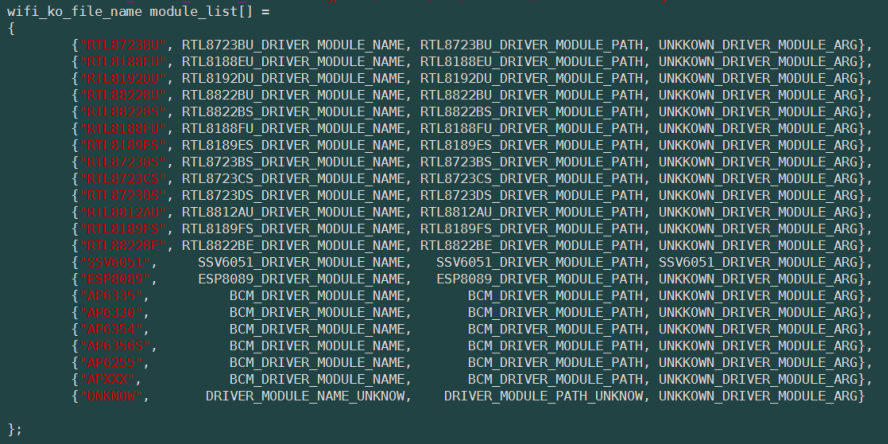
Technical figure 1, source PDF page 11 (bilingual original)
3.3 wpa_supplicant arguments
init.connectivity.rc reads /vendor/etc/wifi/wpa_config.txt:
service wpa_supplicant /vendor/bin/hw/wpa_supplicant \
    /vendor/etc/wifi/wpa_config.txt
    # we will start as root and wpa_supplicant will switch to user wifi
    # after setting up the capabilities required for WEXT
    # user wifi
    # group wifi inet keystore
    interface android.hardware.wifi.supplicant@1.0::ISupplicant default
    interface android.hardware.wifi.supplicant@1.1::ISupplicant default
    interface android.hardware.wifi.supplicant@1.2::ISupplicant default
    class main
    socket wpa_wlan0 dgram 660 wifi wifi
    disabled
    oneshot
The source path deivice/rockchip/common/wpa_config.txt appears to misspell device. wpa_supplicant/main.c selects by chip; APxxx uses BROADCOM_MODULE_NAME to find [broadcom].
int main(int argc, char *argv[])
{
    int ret = -1;
    char module_type[20]={0};
    wpa_printf(MSG_INFO,"argc = %d\n",argc);
    if(argc == 2) {
        if (wifi_type[0] == 0) {
            check_wifi_chip_type_string(wifi_type);
        }
        wpa_printf(MSG_INFO,"Current wifi chip is %s\n",wifi_type);
        if (0 == strncmp(wifi_type, "RTL", 3)) {
            wpa_printf(MSG_INFO,"Start rtl wpa_supplicant\n");
            ret = read_wpa_param_config(REALTEK_MODULE_NAME,argv[1]);
        } else if (0 == strncmp(wifi_type, "AP", 2)) {
            wpa_printf(MSG_INFO,"Start bcm wpa_supplicant\n");
            ret = read_wpa_param_config(BROADCOM_MODULE_NAME,argv[1]);
        } else if (0 == strncmp(wifi_type, "SSV", 3)) {
            wpa_printf(MSG_INFO,"Start ssv wpa_supplicant\n");
            ret = read_wpa_param_config(SSV_MODULE_NAME,argv[1]);
        } else if (0 == strncmp(wifi_type, "ESP", 3)) {
            wpa_printf(MSG_INFO,"Start esp wpa_supplicant\n");
            ret = read_wpa_param_config(ESP_MODULE_NAME,argv[1]);
        } else {
            wpa_printf(MSG_INFO,"Start wpa_supplicant\n");
            sprintf(module_type,"[%s]",wifi_type);
            ret = read_wpa_param_config(module_type,argv[1]);
        }
    } else {
        wpa_printf(MSG_INFO,"Start wpa_supplicant\n");
        ret = main_loop(argc, argv);
    }
    return ret;
}
#define BROADCOM_MODULE_NAME "[broadcom]"
[broadcom]
/vendor/bin/hw/wpa_supplicant
-O/data/vendor/wifi/wpa/sockets
-puse_p2p_group_interface=1
-g@android:wpa_wlan0
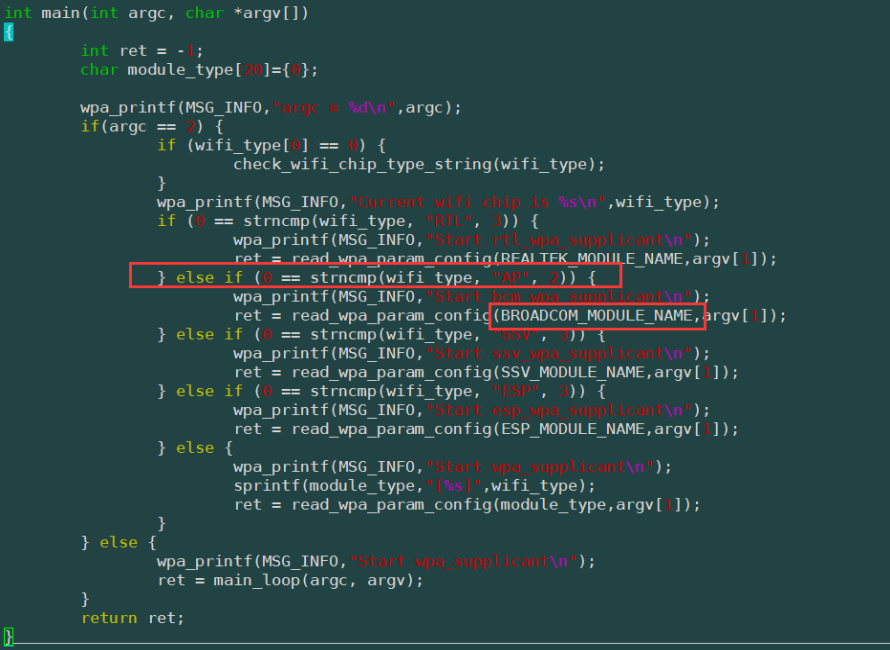
Technical figure 1, source PDF page 12 (bilingual original)

Technical figure 2, source PDF page 12 (bilingual original)

Technical figure 3, source PDF page 12 (bilingual original)
[broadcom], [realtek], [ssv] and [esp] parameters exist; add other modules in this format.
4 Hardware/software compatibility
One source SDK firmware supports SDIO2.0/3.0, with clocks up to 50M/150M. See Rockchip-Developer-Guide-linux4.4-SDMMC-SDIO-eMMC.pdf and Rockchip-Developer-Guide-linux4.4-PCIe.pdf.
5 Building .ko
.ko must match kernel.img networking configuration. If debugging changes it, run mkimage.sh, regenerate vendor.img and flash both.
6 Driver loading
Without automatic compatibility the driver can be built in. AP6255 example (first name lacks CONFIG_ in source; check Kconfig):
WIFI_BUILD_MODULE = n
CONFIG_AP6XXX = y
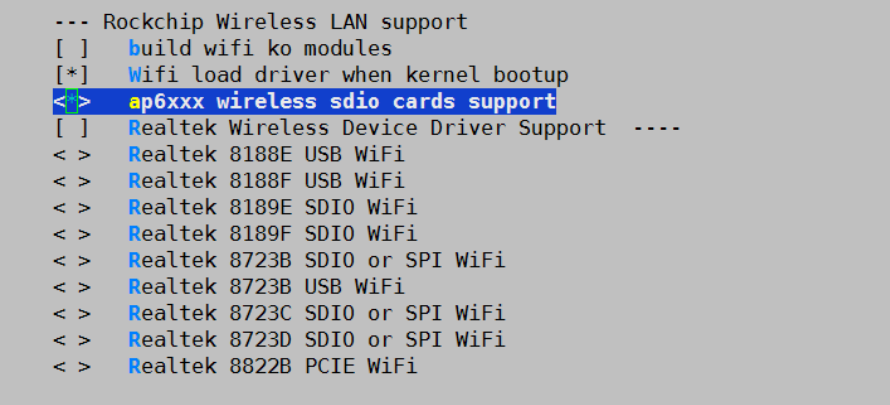
Technical figure 1, source PDF page 14 (bilingual original)
7 Wi-Fi cannot start
First confirm USB/SDIO exists after boot. Normal logs:
mmc2: new ultra high speed SDR104 SDIO card at address 0001
usb 2-1: new high-speed USB device number 2 using ehci-platform
usb 2-1: New USB device found, idVendor=0bda, idProduct=b82c
usb 2-1: New USB device strings: Mfr=1, Product=2, SerialNumber=3
usb 2-1: Product: 802.11ac NIC
If absent, check power, enumeration, hardware and DTS pins. Power is required to read IDs. Inspect uevent under sys/bus/sdio/devices or sys/bus/usb/devices. AP6255 example:
cat /sys/bus/sdio/devices/mmc1\:0001\:3/uevent
SDIO_CLASS=02
SDIO_ID=02D0:A9BF
MODALIAS=sdio:c02v02D0dA9BF

Technical figure 1, source PDF page 15 (bilingual original)

Technical figure 2, source PDF page 15 (bilingual original)
After identification check loading; the figure shows not ready to ready. The source mapping is retained; RTL8188EU→8188fu.ko appears wrong. Check android/frameworks/opt/net/wifi/libwifi_hal/wifi_hal_common.cpp.
| Module | .ko |
|---|---|
| AP6xxx(SDIO) | bcmdhd.ko |
| RTL8723BU(USB) | 8723bu.ko |
| RTL8188EU(USB) | 8188eu.ko |
| RTL8188EU(USB) | 8188fu.ko |
| RTL8723BS(SDIO) | 8723bs.ko |
| RTL8723CS(SDIO) | 8723cs.ko |
| RTL8723DS(SDIO) | 8723ds.ko |
| RTL8189ES(SDIO) | 8189es.ko |
| RTL8189FS(SDIO) | 8189fs.ko |
For mismatches/missing files revisit1.1/1.2. The old screenshot uses /vendor/lib/modules/wifi versus /vendor/lib/modules/ in prose; check actual SDK packaging. Networking changes without rebuilding ko may cause kernel panic; see5.
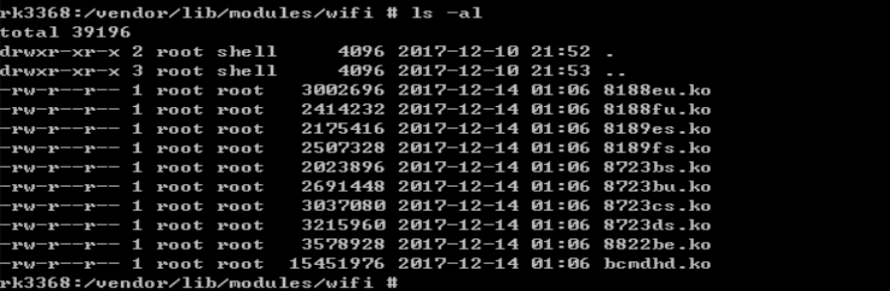
Technical figure 1, source PDF page 16 (bilingual original)
8 SDIO diagnosis
8.1 Hardware
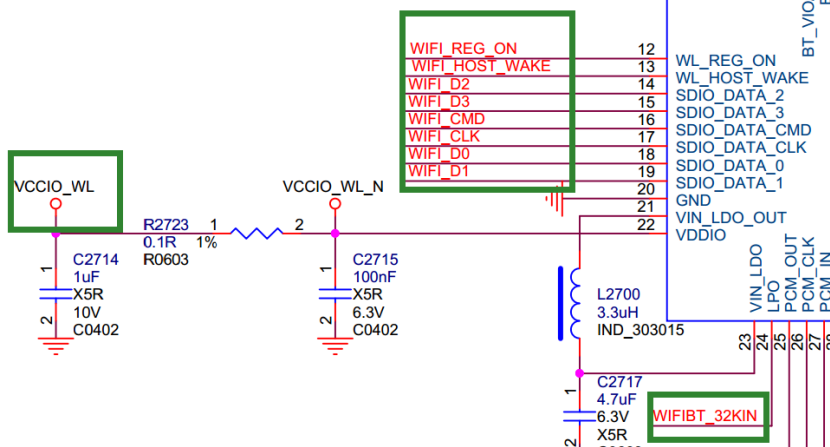
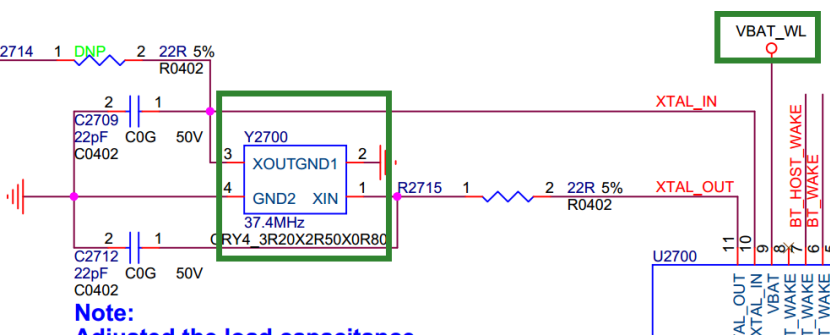
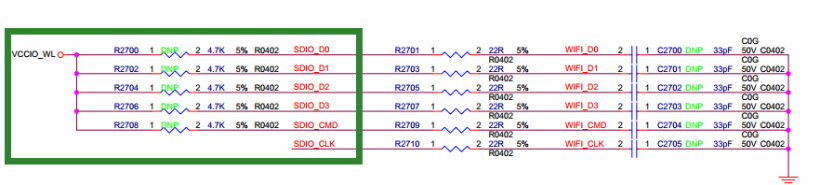
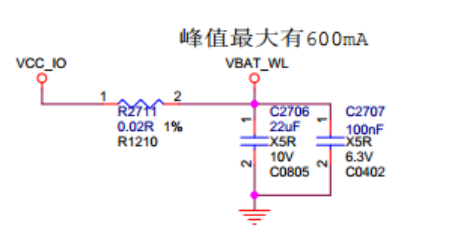
Focus on green boxes:
Technical figure 2, source PDF page 16 (bilingual original)
Technical figure 1, source PDF page 17 (bilingual original)
Technical figure 2, source PDF page 17 (bilingual original)
- WIFI_D0~3 data and WIFI_CMD command lines are normally high at VCCIO_WL voltage.
- WIFI_CLK is normally low, also at VCCIO_WL level.
- VBAT_WL stays high; source wording “need to print3.3V” is unclear. Retain3.3V and check module specifications.
- VCCIO_WL supplies DATA/CMD/CLK at3.3V/1.8V; source requires1.8V forSDIO3.0.
- WIFI_REG_ON is3.3V operating,0V disabled.
- 32K and26M/37.4M oscillators should output waveforms.
Check voltage and oscillators first. Always-on VBAT_WL/VCCIO_WL can sag when shared, causing faults; VCC_IO feeds multiple peripherals in the diagram.
Technical figure 1, source PDF page 18 (bilingual original)
8.2 Software and waveforms
Command/response formats include start, transmission, content, CRC and end bits. Long responses and all bus-width diagrams are retained.
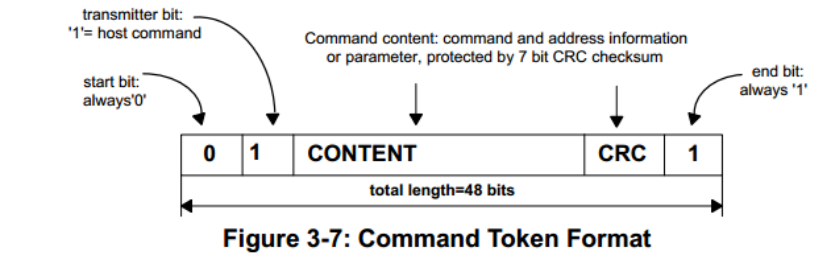
Technical figure 2, source PDF page 18 (bilingual original)
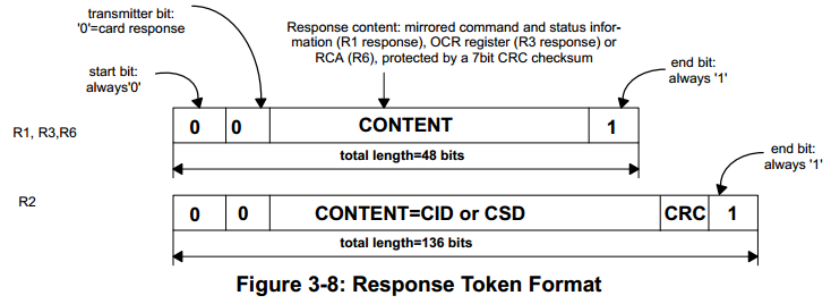
Technical figure 3, source PDF page 18 (bilingual original)
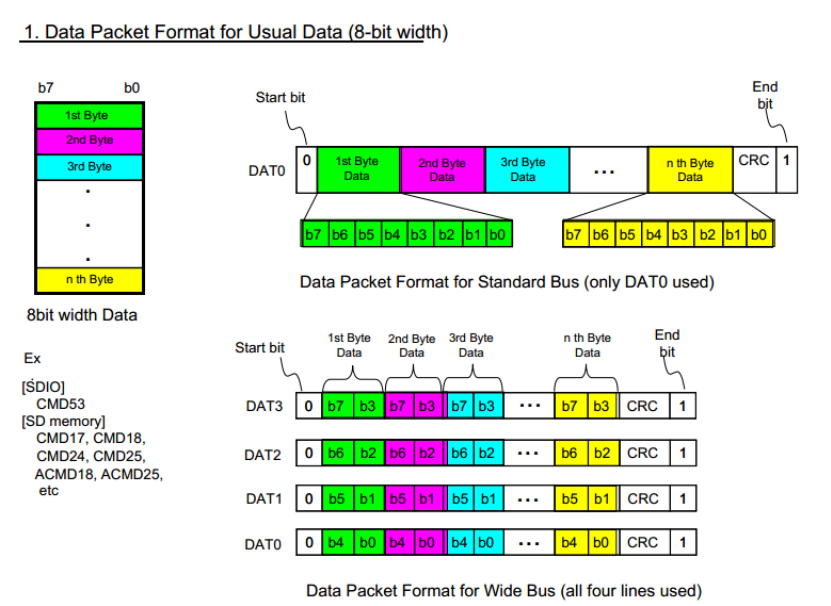
Technical figure 1, source PDF page 19 (bilingual original)
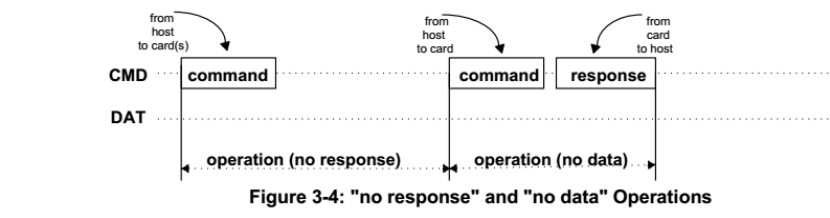
Technical figure 2, source PDF page 19 (bilingual original)
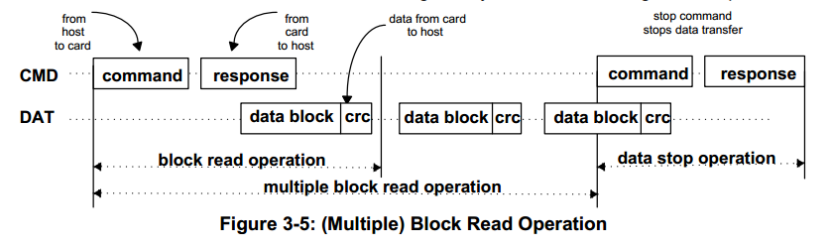
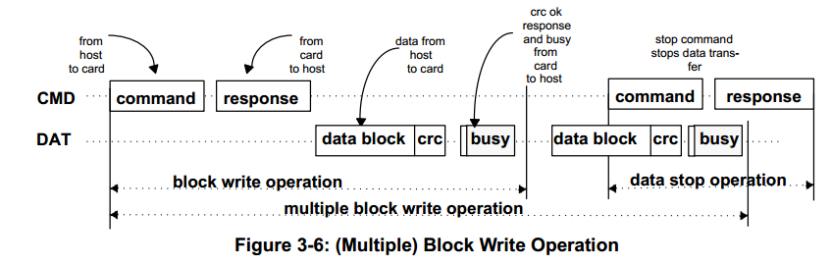
The source summarizes48 clocks/48 bits from host and card; actual length depends on command, not every response. Above identification, below multiblock reads/writes.
Technical figure 1, source PDF page 20 (bilingual original)
Technical figure 2, source PDF page 20 (bilingual original)
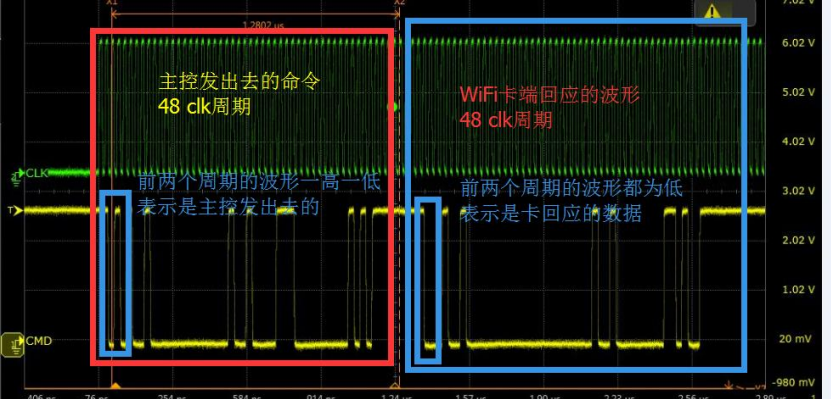
Example: green SDMMC_CLK, yellow SDMMC_CMD, idle high. The source identifies high/low start as host command and two lows as card response; interpret with bit timing. Shown packets are generally48 bits/clocks; confirm the card responds. DTS SDIO must be okay with no pin-mux conflict.
Technical figure 1, source PDF page 21 (bilingual original)
8.3 Typical errors
- Voltage: check WIFI_DATA and VCCIO_WL.
[ 100.086615] slot->flags = 3
[ 100.086628] CPU: 0 PID: 113 Comm: kworker/u8:3 Tainted: P W O 3.10.0 #250
[ 100.086644] Workqueue: kmmcd mmc_rescan
[ 100.086663] [<c0013e04>] (unwind_backtrace+0x0/0xe0) from [<c0011720>]
(show_stack+0x10/0x14)
[ 100.086677] [<c0011720>] (show_stack+0x10/0x14) from [<c050d3b4>]
(dw_mci_set_ios+0x9c/0x21c)
[ 100.086689] [<c050d3b4>] (dw_mci_set_ios+0x9c/0x21c) from [<c04fabd4>]
(mmc_power_up+0x60/0xa0)
[ 100.086700] [<c04fabd4>] (mmc_power_up+0x60/0xa0) from [<c04faeac>]
(mmc_rescan_try_freq+0x14/0xd0)
[ 100.086710] [<c04faeac>] (mmc_rescan_try_freq+0x14/0xd0) from [<c04fb7b4>]
(mmc_rescan+0x204/0x298)
[ 100.086722] [<c04fb7b4>] (mmc_rescan+0x204/0x298) from [<c00471f0>]
(process_one_work+0x29c/0x458)
[ 100.086734] [<c00471f0>] (process_one_work+0x29c/0x458) from [<c0047540>]
(worker_thread+0x194/0x2d4)
[ 100.086745] [<c0047540>] (worker_thread+0x194/0x2d4) from [<c004ca28>] (kthread+0xa0/0xac)
[ 100.086759] [<c004ca28>] (kthread+0xa0/0xac) from [<c000da98>] (ret_from_fork+0x14/0x3c)
[ 100.086767] 1400..dw_mci_set_ios: wait for unbusy timeout....... STATUS = 0x206 [mmc2]
[ 102.546615] 1009..mci_send_cmd: wait for unbusy timeout.......[mmc2]

[ 102.595819] mmc_host mmc1: Timeout sending command (cmd 0x202000 arg 0x0 status
0x80202000)
- Wi-Fi fault: check VBAT_WL, WIFI_REG_ON and oscillators; or long traces degrade signals: reduce frequency/revise hardware.
dwmmc_rockchip 10218000.rksdmmc: req failed (CMD52): error = 110, timeout = 8000ms
[mmc2] - Timeout recovery procedure start --
rk_sdmmc: BOOT dw_mci_setup_bus: argue clk_mmc workaround out 800000Hz for init[mmc2]
mmc_host mmc2: Bus speed (slot 0) = 37500000Hz (slot req 400000Hz, actual 398936HZ div = 47)
rk_sdmmc: BOOT dw_mci_setup_bus: argue clk_mmc workaround out 800000Hz for init[mmc2]
[mmc2] -- Timeout recovery procedure finished --
- Long traces/poor waveforms: reduce frequency or revise hardware.
[ 200.731403] [mmc2] Data transmission error !!!! MINTSTS: [0x00000080]
[ 200.731426] [mmc2] host was already tuning, Don't need to retry tune again ignore 0.
- Abnormal WIFI_REG_ON.
rk_sdmmc: BOOT dw_mci_setup_bus: argue clk_mmc workaround out 800000Hz for init[mmc2]
rk_sdmmc: BOOT dw_mci_setup_bus: argue clk_mmc workaround out 400000Hz for init[mmc2]
rk_sdmmc: BOOT dw_mci_setup_bus: argue clk_mmc workaround out 600000Hz for init[mmc2]
Reference
ArmSoM documentation, RK-SM-YF-211 V1.6, PDF pages5–22.